Microsoft invented the iPhone Duo back in 2009 [Video]
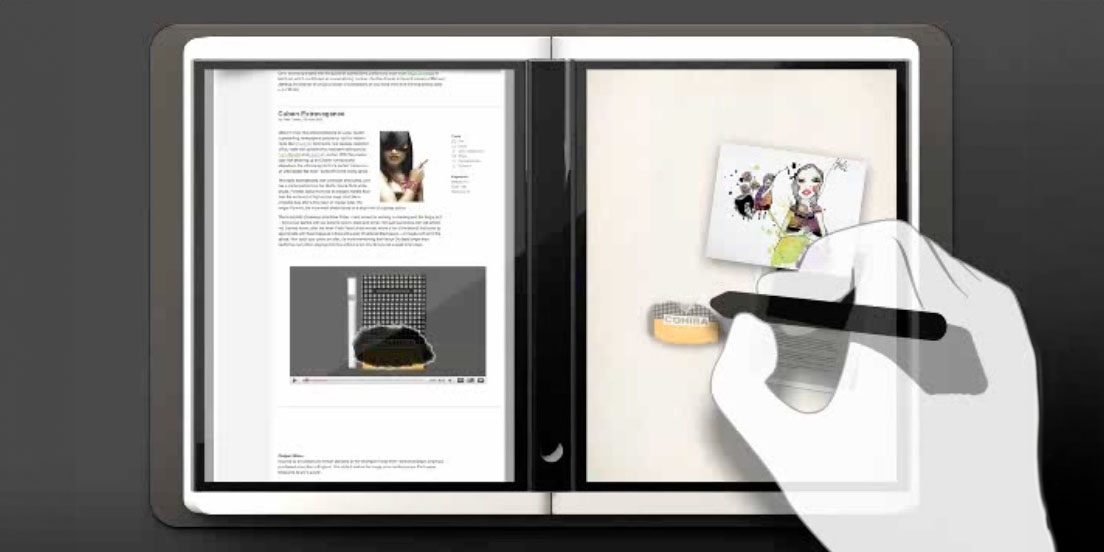
The iPhone Duo bears a striking resemblance to a prototype device that first appeared in 2009 — the Microsoft Courier. While the headline may be tongue-in-cheek, the visual and functional similarities between the two foldable concepts are hard to ignore.
Microsoft never advanced the Courier beyond prototype stage, abandoning the project in less than a year. Yet looking back at that original concept video now reveals just how closely Apple's current foldable matches the integrated user-interface Microsoft had envisioned.
The 2009 Courier Vision
The Microsoft Courier was designed as a dual-screen folding device with a hinge in the middle, allowing content to flow seamlessly across both panels. Its concept video demonstrated drag-and-drop interactions between screens that feel remarkably contemporary today.
Microsoft's prototype imagined a journal-style interface where users could sketch, annotate, and move content fluidly between the two displays. The company showcased capabilities that seemed futuristic at the time but are now central to modern foldable phone design.
Despite the compelling vision, Microsoft shelved the project less than a year after unveiling it. The Courier never saw a commercial release, leaving its ambitious interface ideas to gather dust in corporate archives.
Apple's Foldable Mastery
Apple has demonstrated how to properly execute a foldable smartphone with the iPhone Duo, and the critical factor is the seamless integration between hardware and software. Unlike earlier foldable attempts that treated the two screens as separate displays, Apple has engineered a unified experience.
The iPhone Duo allows users to drag part of a photo from one side of the screen to a separate app on the other side. This cross-panel interaction is the kind of fluid multitasking that makes a foldable form factor genuinely useful rather than merely novel.
It is quite amusing to see Microsoft demonstrating a very similar capability in that 2009 concept video. The parallel suggests that Apple has essentially realized the vision that Microsoft conceptualized over a decade ago.
Surface as the Partial Heir
Microsoft did eventually run with some of the Courier's type of capability through its Surface product line. The Surface devices incorporated certain multi-screen and stylus-driven interactions that echoed the original Courier concept.
However, the integration level never fully matched what the 2009 prototype had promised. The Surface line pursued a laptop-tablet hybrid approach rather than the dual-screen journal concept that defined the Courier.
It is ironic that it took Apple to really match the level of integration that Microsoft originally had in mind. The iPhone Duo delivers the fluid, cross-screen experience that the Courier only hinted at in its prototype stage.
Hardware and Software Convergence
The iPhone Duo succeeds because Apple has treated the foldable form factor as a new category rather than a gimmick. The hinge mechanism, display technology, and operating system all work in concert to create a cohesive experience.
Apple's approach means that apps are designed to take advantage of both screens simultaneously, rather than simply stretching content across a larger display. This design philosophy is what separates the iPhone Duo from less ambitious foldable competitors.
The ability to drag content between apps and across screens represents a fundamental shift in how users interact with their devices. It is the kind of innovation that makes the iPhone Duo feel like a natural evolution rather than a forced experiment.
The Video That Predicted It All
The 2009 Microsoft concept video now appears eerily prescient, showing interactions that the iPhone Duo has only recently made mainstream. Watching the old footage, viewers can see the same photo-dragging gestures and cross-screen workflows that Apple now champions.
The video demonstrates how Microsoft's designers imagined users seamlessly moving content between the two panels of the Courier. That vision was ahead of its time, but the hardware and software technology of 2009 was not ready to support it.
Apple has taken that conceptual baton and run with it, refining the interactions and building the necessary infrastructure to make them work flawlessly.
Lessons from a Shelved Project
The Courier's abandonment serves as a cautionary tale about timing and execution in the technology industry. Microsoft had the right idea but lacked the ecosystem and hardware maturity to bring it to market.
Apple's advantage lies in its ability to control both the hardware and software layers, ensuring that the iPhone Duo delivers a polished experience. This vertical integration is something Microsoft could never fully replicate with the Courier.
The iPhone Duo proves that great ideas can wait for the right moment to be realized. What was a prototype in 2009 has become a flagship product in the present day.
A Decade of Evolution
The journey from the Microsoft Courier prototype to the iPhone Duo spans over a decade of technological advancement. Displays have become flexible, batteries have grown more efficient, and processors can now handle the demands of multi-screen computing.
The 2009 prototype relied on technology that was simply not ready for prime time. The iPhone Duo benefits from years of refinement in foldable display technology, hinge engineering, and power management.
This evolution explains why the iPhone Duo can deliver on promises that the Courier could only visualize. The hardware has finally caught up with the software vision.
The Legacy of the Courier
The Microsoft Courier may never have shipped, but its influence is now visible in one of the most anticipated devices in recent memory. The prototype's design language and interaction model have found their ultimate expression in the iPhone Duo.
Microsoft's willingness to experiment with radical form factors, even if those experiments never reached production, helped pave the way for the foldable category. The company's early work provided a blueprint that Apple has now perfected.
The iPhone Duo stands as a testament to the power of persistent innovation and the value of revisiting ideas whose time may not have come — until now.