iPhone Duo Has a Hidden Display Setting for Case Compatibility
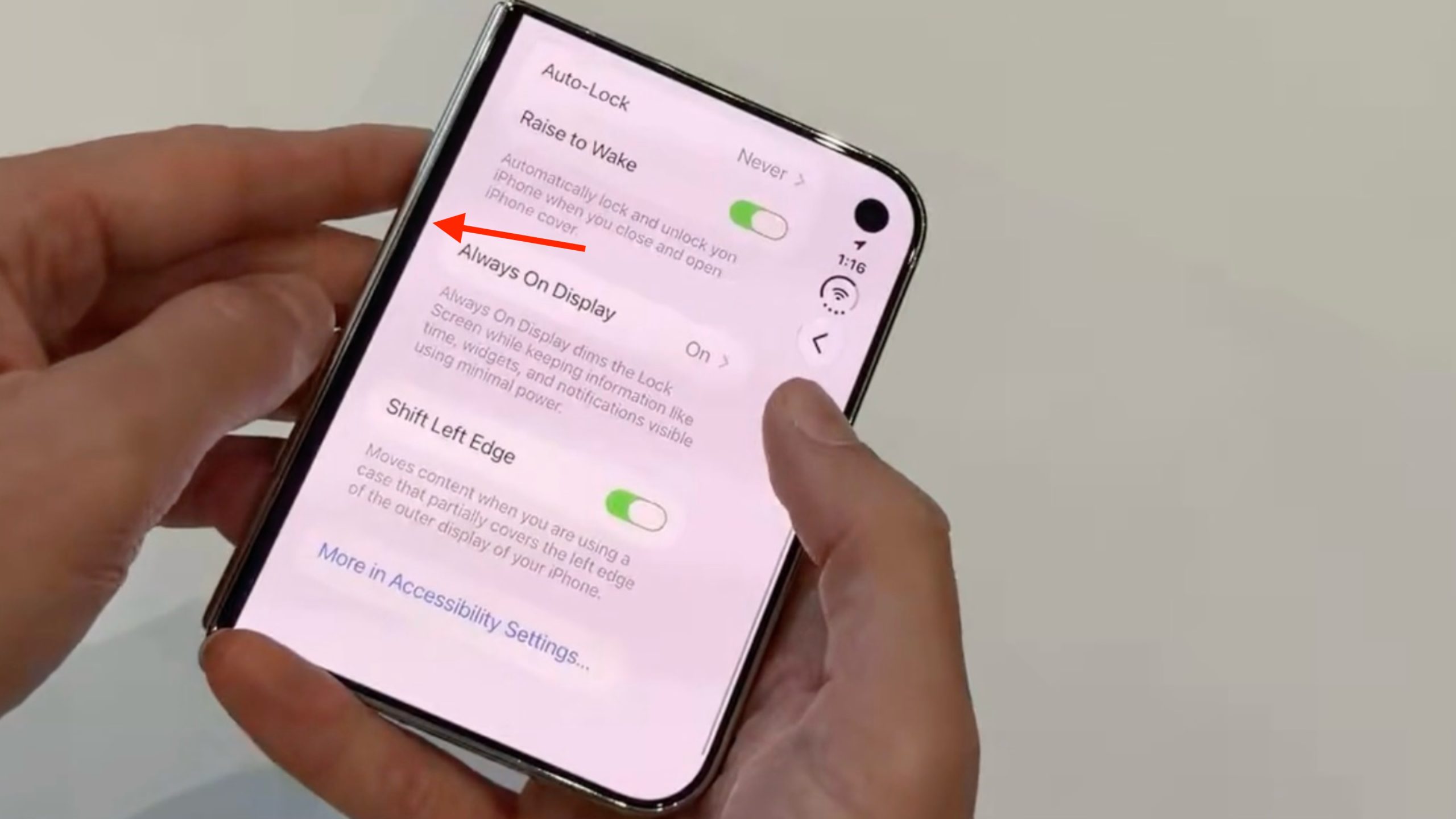
Apple’s foldable iPhone Duo adds a hidden option that inserts a narrow black border on the left side of the screen. The feature, named Shift Left Edge, effectively doubles the border’s width to help the device work with certain protective cases.
Background
The setting was uncovered by blogger Nicolas Lellouche during a hands‑on session that followed Apple’s iPhone event stream last week. Lellouche posted his discovery on social media, linking directly to the Display & Brightness menu where the toggle resides.
Hidden Display Setting
Shift Left Edge lives inside the Display & Brightness preferences and can be enabled with a single tap. When active, the left‑hand edge of the screen receives an extra black margin that expands the touch‑free zone for the iOS back‑swipe gesture. This adjustment ensures that the gesture registers correctly even if a case obscures the edge.
Compatibility with Cases
Apple designed the feature to accommodate cases that extend over the left edge of the iPhone Duo display. By widening the black border, the system compensates for the physical obstruction, preserving the fluidity of the native swipe‑back navigation. The solution targets bulky third‑party protectors that tend to cover more than the standard bezel.
Official Cases and Third‑Party Considerations
Apple currently sells two official cases for the foldable: the iPhone Duo Case and the Folio with Kickstand. Neither case appears to conceal the left edge, suggesting Apple expects users to pair the device with third‑party options that might. The hidden setting therefore acts as a safety net for customers who favor heavier protection without sacrificing iOS gestures.
Launch Timeline and Market Expectations
Pre‑orders for the iPhone Duo open on October 16, with shipments slated to begin on October 23. Early adopters will be among the first to test the Shift Left Edge feature in real‑world scenarios, and reviewers are expected to comment on its effectiveness once hands‑on impressions are published.
Potential Impact on User Experience
By providing a software workaround for hardware constraints, Apple reinforces its reputation for seamless integration between hardware and iOS. Users who prefer robust cases can now enjoy the full swipe‑back experience without needing to remove protection each time they navigate.
Developer Implications
The added border is rendered at the system level, meaning third‑party apps will see the same visual area as native iOS components. Developers do not need to adjust layout constraints, but they should test UI elements near the left edge to ensure no unintended clipping occurs when the setting is active.
Comparison with Previous Models
Earlier iPhone generations relied solely on physical bezel dimensions to guarantee gesture reliability. The iPhone Duo marks a shift by embedding a configurable margin, a strategy that could influence future designs of foldable and edge‑to‑edge devices across the industry.
Community Reaction
Tech forums have already sparked discussions about the practicality of Shift Left Edge, with many users praising Apple’s foresight. Some skeptics argue that a software fix may not fully replicate the tactile feel of an unobstructed edge, but the consensus leans toward appreciation for the added flexibility.
Future Outlook
If the hidden setting proves popular, Apple may expand similar options to other models, especially as more devices adopt minimal bezels. The approach could become a standard feature for accommodating diverse case ecosystems while preserving core iOS interactions.
Conclusion
The discovery of Shift Left Edge highlights Apple’s attention to detail in the iPhone Duo launch. By blending a simple software toggle with thoughtful case compatibility, the company addresses a real‑world problem without compromising design aesthetics. As pre‑orders begin on October 16 and the phone reaches stores on October 23, the hidden setting will be a key talking point in early reviews and user experiences.