Apple researchers unveil SimpleDesign, a new AI model for protein design
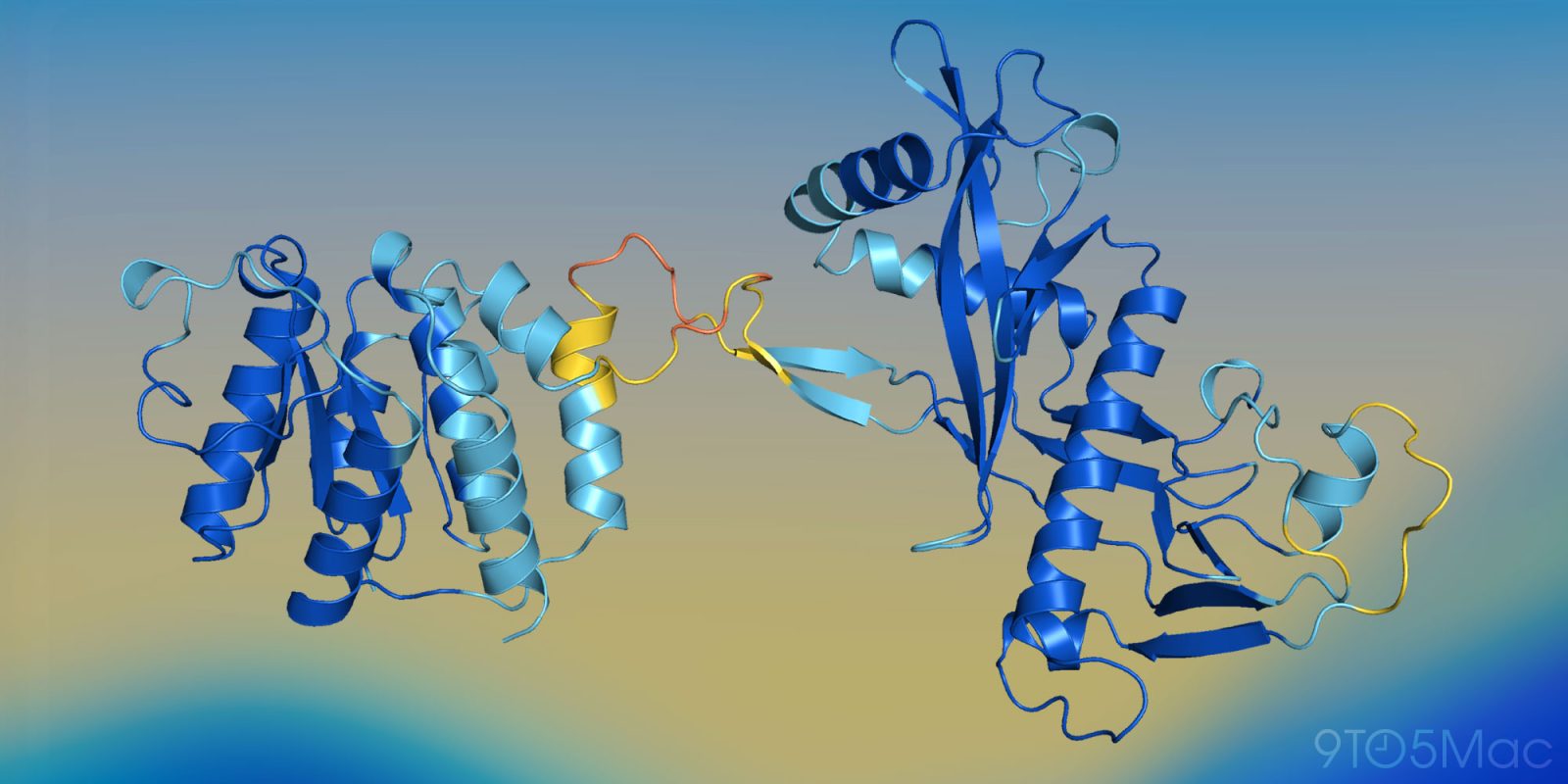
Apple Unveils SimpleDesign: A Streamlined AI Model for Joint Protein Sequence and Structure Generation Apple researchers have introduced SimpleDesign, an AI model that generates both amino acid sequences and 3D protein structures in a single end-to-end training process, trained on over 2 million protein sequence-and-structure pairs. Specifications SimpleDesign was trained on more than 2 million protein sequence-and-structure pairs primarily from the AFESM dataset, which combines AlphaFold Database predictions with additional samples.
The model uses flow-matching architecture paired with general-purpose Transformer blocks, avoiding the need for autoencoder-based latent space training or discrete tokenization of protein structures. Features SimpleDesign learns to generate amino acid sequences and continuous 3D structures simultaneously by corrupting both sequence (via random masking) and structure (via added noise) during training, enabling it to handle protein folding, inverse folding, and co-design tasks within a unified framework.
The model delivers competitive results across protein co-design, structure generation, and sequence generation benchmarks despite its simpler training pipeline, and produces amino acid sequences that are as good as or better than those from most competing multimodal models. Price and Availability SimpleDesign is a research model developed by Apple and is not a commercial product; therefore, it has no price, release date, or retail availability.
The full study detailing SimpleDesign’s architecture, training process, benchmarks, and results is publicly accessible via the link provided in the source article. Verdict Researchers and developers working in computational biology, protein design, or AI-driven drug discovery should explore SimpleDesign as a promising step toward more efficient, general-purpose generative models for biomolecules—though its outputs remain limited to computer-based evaluation and require experimental validation before biological application.