Apple nailed iPhone Duo split screen, even as iPad multitasking feels convoluted
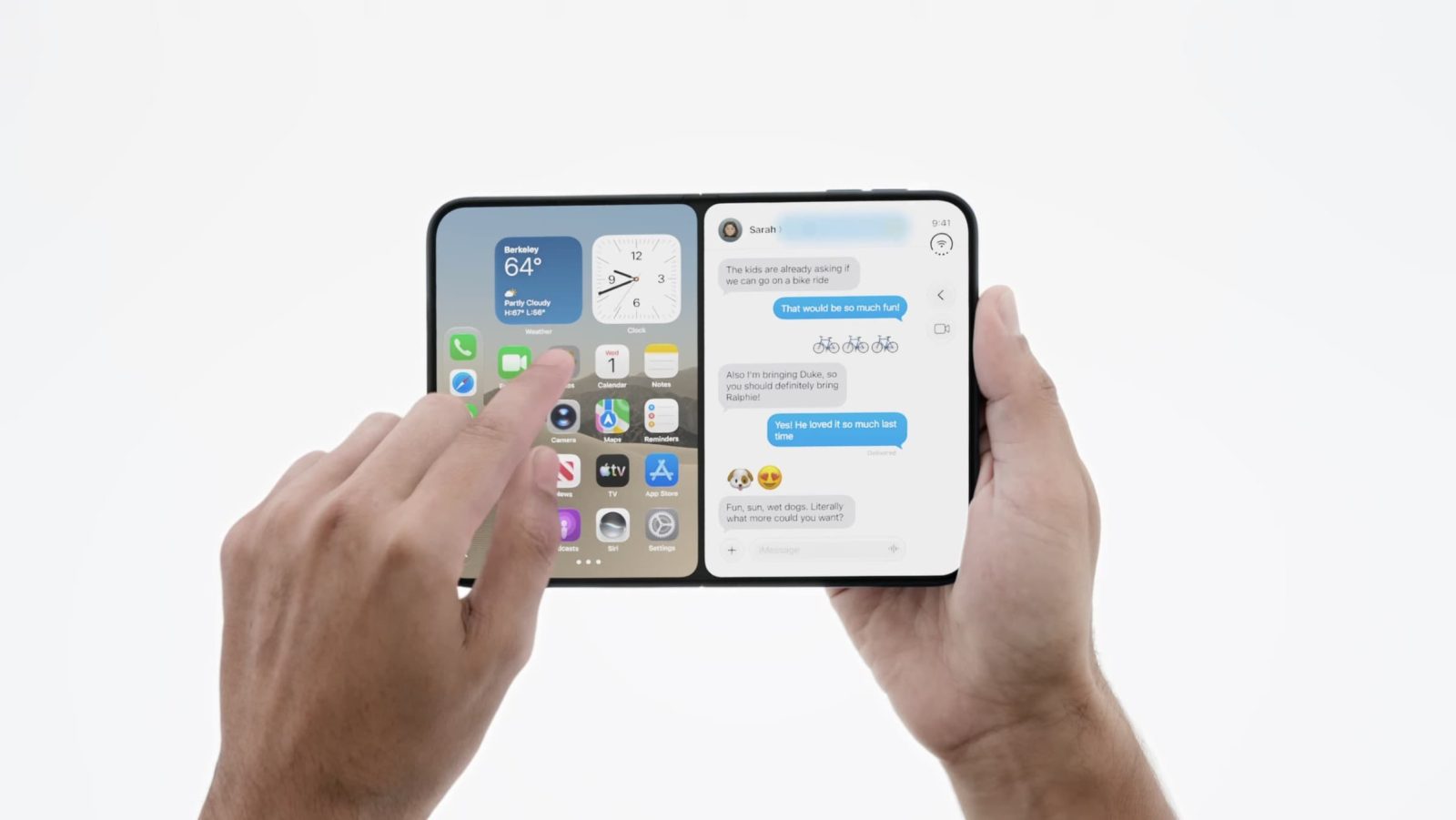
Apple's new iPhone Duo — the company's first foldable iPhone — delivers a multitasking experience so elegant that it makes the iPad's approach feel broken by comparison. The author of the source text praises the Duo as "a fantastic device," yet admits it leaves a lingering wish: that Apple applied the same design thinking to the iPad. The frustration is rooted in iPadOS 26, which introduced a windowing system that forces users into an all-or-nothing paradigm that feels hostile to anyone without a Magic Keyboard.
The iPhone Duo's Multitasking Breakthrough
The iPhone Duo redefines how multitasking should work on a foldable device. Its core innovation is the ability to place an app into half of a split-screen view while still seeing your full home screen to select a second app. This eliminates the awkward app-switcher dance that plagues other foldables and traditional tablets alike.
Another standout feature is the ability to save apps as a pair for instant swapping later. This means users can lock in their preferred app combinations — say, a browser and a notes app — and recall them with minimal friction. The Duo also offers something no iPad currently provides: the ability to split-screen a video alongside another app in a single view.
For a device that folds into a phone-sized form factor, this is a remarkable achievement. The author notes that Apple "nailed the software implementation in a manner that nobody was really thinking about," calling it an obvious direction for the future of foldables in hindsight.
iPadOS 26's All-or-Nothing Windowing Problem
The source text traces the issue back to iPadOS 26, released last year, which introduced a full windowing system. The problem is that the system offers only two extremes: you're either fully committed to windowing, or you're restricted to full-screen apps. There is no middle ground that feels natural for casual or quick multitasking.
Apple did later re-introduce split screen and Slide Over in subsequent updates, but these features still require the user to engage with the windowing system as a prerequisite. That means even simple tasks — like checking a message while watching a video — demand a level of setup that feels cumbersome for everyday use.
The author expresses a clear sense of loss, saying they miss "the earlier days of iPad multitasking." The windowing system may be powerful, but it lacks the immediacy that made iPad multitasking feel approachable in the past.
The iPad Mini Parallel: Size Doesn't Justify Complexity
The iPad mini is almost the same physical size as the iPhone Duo, making it the perfect candidate for the Duo's simpler multitasking model. Yet iPadOS 27 still applies the exact same all-or-nothing approach, even on this small-screen device where windowing is described as "far too convoluted."
On a screen as compact as the iPad mini's, juggling multiple windows and resizing panes is an exercise in frustration. The Duo's approach — where one app occupies half the screen while the home screen remains visible for selection — would be dramatically more usable on this hardware.
The author makes a direct comparison: "On iPad mini, which is very similarly sized to iPhone Duo, this could be excellent." The implication is clear: Apple has already built the right tool, yet refuses to deploy it where it would help the most.
iPadOS 27 Repeats the Same Mistake
With iPadOS 27, Apple continues its "all or nothing" philosophy, leaving no room for a lighter-weight multitasking mode. Even on the iPad mini, where the windowing system is practically unusable, there is no alternative path.
The author argues that this isn't a technical limitation. At its core, iPadOS is still iOS, and while not every feature can automatically scale from a phone to a tablet, the transfer shouldn't be "a massive undertaking." The engineering groundwork is already laid — the Duo proves that Apple knows how to build a simpler, more intuitive multitasking interface.
The source text frames this as a missed opportunity: "If Apple has already engineered a simpler multitasking system, why not bring it to the iPad?" It's a question that Apple has yet to answer.
The Case for Bringing Duo's Multitasking to iPad
The iPhone Duo offers a vision for how multitasking could feel on the iPad — and it's a vision that doesn't require removing windowing for power users. The author isn't suggesting Apple eliminate the existing system; rather, they want an option for those who don't need (or want) the full windowing experience.
This would be especially valuable for users who don't own a Magic Keyboard. The author describes current iPad multitasking as "borderline hostile towards those of us who aren't using a Magic Keyboard," noting that the windowing system seems designed for keyboard-and-trackpad workflows rather than touch-first interactions.
The solution could be as simple as offering a "simple mode" on iPadOS that mirrors the Duo's approach — one app in a pane, home screen visible, app pairs saved for quick recall. This would give casual users a comfortable path while leaving the advanced windowing system intact for professionals.
A Software Implementation Worth Emulating
The author's excitement about the iPhone Duo is genuine and specific. They praise Apple for the software implementation, which they believe nobody anticipated but that now seems like the obvious future of foldable devices.
The Duo's multitasking is described as "much more elegant" than what's available on any iPad. The ability to split-screen video with an app — a feature no iPad currently offers — is singled out as a highlight that would be particularly valuable on the iPad mini's screen.
The takeaway is that Apple has already built the better mousetrap; it just chose to put it on a phone instead of a tablet. The source text concludes with a wistful note: the author is "incredibly excited" for the Duo but wishes the iPad didn't feel like an afterthought in Apple's multitasking vision.
The Verdict: Apple's Foldable Should Inform iPadOS
The iPhone Duo isn't just a new product; it's a design philosophy statement. It demonstrates that multitasking can be simple, visual, and immediate — without sacrificing power for those who need it.
For the iPad, the message is clear: the hardware is ready, the software is capable, and the user base is eager. The only missing piece is Apple's willingness to treat the iPad as more than a windowing machine. If iPadOS 27 had adopted even a fraction of the Duo's approach, the author argues, the iPad mini alone would be a dramatically better device.
As it stands, the iPad continues to offer a multitasking experience that feels like it was designed for a keyboard-first world, while the iPhone Duo proves that a touch-first, visual approach is not only possible — it's superior. Apple has the blueprint; it's time to use it.